
Trusted Inspections, Clear Truth® Since 2012


SERVICES
Well Flow Testing in Massachusetts & RI
Ensuring a Safe and Reliable Water Supply: MA Well Flow Testing
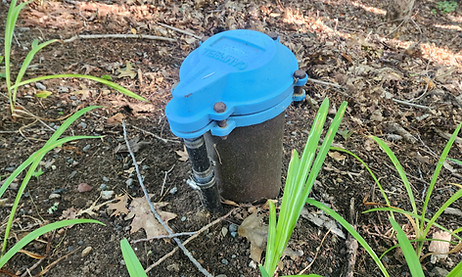
Well cap.
If your home relies on a private well, the quality and reliability of your water supply are crucial to your well-being. Unlike municipal water systems, private wells lack government oversight—you are responsible for ensuring the water is safe and the system is functioning correctly.
That's why well flow testing in Massachusetts & RI is such an important step when buying, selling, or maintaining a property.
What Is Well Flow Testing?
A well flow test measures the amount of water your well can produce over a specific period of time. The goal is to determine whether the well can meet the demands of a household or small commercial property.
Inspectors monitor the flow rate (gallons per minute) and sustained yield of the well by running water for a set time—two or four hours—while checking for pressure drops and recovery rates.
Why Well Flow Testing Is Essential in Massachusetts
Massachusetts is home to many properties that rely on private wells, especially in rural and suburban areas. Since private wells are not regulated like municipal water supplies, problems can go undetected until it's too late.
Key reasons for well flow testing include:
Home purchases: Buyers need assurance that the well can handle daily water use.
Home sales: Sellers avoid delays or disputes by providing proof of water reliability.
Property maintenance: Homeowners can identify declining well performance before it becomes a significant issue.
Loan requirements: Some lenders ask for a well flow test on a property with a private well.
What's Measured in a Well Flow Test?
A professional well inspection typically evaluates:

Water level before the test
Water level while pumping
Gallons per minute (GPM)
The amount of water the well produces.
Pressure levels
Ensuring stable water pressure during sustained use.
Pump performance
Detecting pump issues that affect delivery.
Storage tank function
Verifying the system maintains pressure and supply.
Recovery rate
Measuring how quickly the well refills after heavy use.
How a well flow test is measured. Water is pumped out of the well while the flow and the pressure are read. An ultrasonic depth reader at the top of the casing reads the water level as it drops and as it comes back.
1
Gallons per minute: the water pumped out of the well.
2
Pressure levels: the gauge at the pressure tank.
3
Pump performance: the pump in the well.
4
Storage tank function: the pressure tank.
5
Recovery rate: the water level in the well, read with an ultrasonic depth reader.
Common Issues Found in Well Flow Testing
During Massachusetts well inspections, some common problems include:
Low water yield due to drought, aquifer changes, or overuse.
Worn or undersized pumps.
Faulty or outdated pressure tanks.
Leaks in pipes or fittings.
Seasonal variations in water availability.
Identifying these issues early prevents costly repairs and ensures consistent access to water.
Well Flow Testing vs. Water Quality Testing
It's essential to note that well flow testing differs from water quality testing.
Flow testing measures quantity (how much water your well produces).
Water quality testing measures safety (whether your water is free of contaminants).
Both tests are worth doing, especially during a home purchase.
Benefits of Well Flow Testing
Confidence for buyers: Know that the well can support your household's needs.
Negotiating power: Address deficiencies before finalizing a sale.
Early detection: Prevent emergencies by catching declining performance.
A measured result: Confirm that your water supply is reliable and consistent.
When to Schedule a Well Flow Test
During real estate transactions (buyer or seller inspections)
After drilling a new well to confirm output
If you notice changes in water pressure
Why Hire a Professional for Well Flow Testing?
A flow test done for a real estate transaction needs to be measured and documented. Inspections Plus provides:
Calibrated testing equipment
Detailed written reports
Experience with private wells in Massachusetts and Rhode Island
Guidance on repairs or improvements, if needed
Schedule Your Well Flow Test
For Massachusetts homeowners and buyers, a well flow test shows whether the property has a sufficient, reliable water supply.
Schedule your Massachusetts well flow test with Inspections Plus today. Call 508-293-1770 to book your appointment.