


Masonry Chimneys in Massachusetts: What Buyers and Homeowners Should Notice Before Heating Season

A masonry chimney is easy to treat as background architecture until the first cold evening puts it back to work. In Massachusetts, that stack of brick is also a weather-exposed structure, a roof penetration, a water-management detail and, when it serves a fireplace or fuel-burning appliance, part of a venting system. Those roles meet in one narrow area of the house, which is why a chimney deserves more than a quick glance before heating season.
I look at a masonry chimney as a series of connected questions. Is the exterior staying intact? Is water being directed away at the top and at the roof? Is the chimney stable where it is visible? What is connected to it? And just as important, what portion of the flue cannot be evaluated during a visual home inspection? A useful inspection separates those questions instead of turning every old mortar joint into an emergency or treating a sound-looking exterior as proof that the entire system is safe.
Why Chimney Inspection in Massachusetts Matters Before Heating Season
The timing is practical. Rain, snow, freeze-thaw exposure and repeated wetting can work on mortar, brick, crown materials and flashing long before a homeowner notices a problem indoors. Once a fireplace, wood stove, boiler or furnace begins operating regularly, the venting side of the system matters too. Exterior condition and interior flue condition are related, but they are not interchangeable.
Massachusetts fire officials advise homeowners to have chimneys inspected and cleaned annually by a qualified professional. The U.S. Consumer Product Safety Commission issued similar winter guidance in January 2026, noting that fireplaces and chimneys were involved in an estimated average of 15,400 fires per year from 2020 through 2022. That national figure is not a prediction about any particular house. It is a clear reason to treat inspection and maintenance as routine safety work rather than something reserved for a visible failure.
Read the Chimney From the Top Down
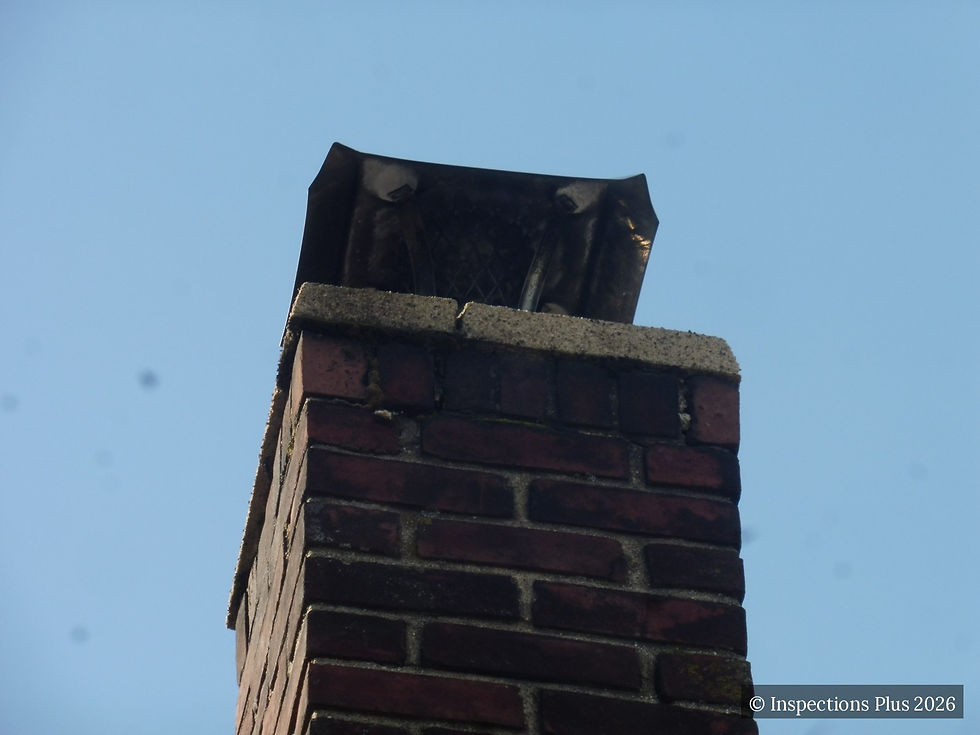
At the top, the crown or wash should shed water away from the flue and masonry. A cap may help keep rain, debris and animals out, depending on the chimney configuration. From the ground or roof, an inspector may see cracking, open joints, displaced material or a missing cap, but visibility varies. A crown that looks acceptable from below may still deserve closer specialist evaluation when access is limited or the service history is unknown.
The brick and mortar below tell a different part of the story. Eroded mortar, spalled brick faces, stepped cracking, movement, staining and layers of patching can show where weathering or repair has occurred. None of those observations should be interpreted in isolation. Older masonry often carries a repair history. The important questions are whether deterioration is active, whether water is still entering, whether the assembly appears stable and whether repair materials are compatible with the masonry.
What Exterior Masonry Can Tell You
A home inspection can document visible conditions and their pattern. Concentrated deterioration near the top can point attention toward the crown, cap and exposure. Damage near the roofline may redirect the investigation toward flashing, runoff and retained moisture. Cracking that continues through several components raises a different concern than a few shallow mortar losses. The pattern helps determine whether routine maintenance, a masonry repair opinion or a more urgent evaluation is appropriate.
What the exterior cannot do is certify the interior passage. A straight-looking chimney with tidy mortar can still have a damaged, obstructed or unsuitable flue. Conversely, an older exterior with localized repairs is not automatically unsafe to operate. Condition, function and scope have to remain separate until the right professional has evaluated each one.
The Flashing Is Only One Part of the Water Problem
Where the chimney passes through the roof, step flashing, counterflashing and any cricket or saddle have to work with the roofing. Sealant smeared over a joint may be a temporary repair or simply evidence that someone chased a leak. It does not, by itself, confirm whether the underlying flashing was installed correctly. Our separate guide to roof flashing explains that junction in more detail; here, the key point is that good flashing cannot compensate for an open crown or saturated masonry, and sound masonry cannot compensate for defective flashing.
Water can also travel in ways that make the visible stain misleading. It may enter at the crown, move through masonry, bypass a failed flashing detail or condense within a venting system. An attic view, when accessible, can add useful evidence around the roof penetration. Even then, a dry day and a dry attic do not prove that leakage has never occurred.
The Interior Flue Is a Separate Question
Massachusetts home-inspection standards call for observation of the visible exterior of chimneys and exposed flashing. They do not turn a general visual inspection into a full internal flue examination. Unless a limited portion is exposed from an accessible opening, the interior passage is largely out of view. That limitation belongs in the conclusion, not in fine print.
When a property changes ownership, the appliance or fuel changes, or there has been a chimney fire, severe weather event or operating problem, the Chimney Safety Institute of America describes a Level 2 inspection as the appropriate deeper evaluation. That scope includes accessible areas and a video scan of the interior flue. A chimney professional can then comment on liners, clearances, connections, deposits, damage and suitability in a way that a home inspection cannot.
When a Buyer Should Ask for Further Investigation
A specialist opinion is reasonable when visible deterioration is more than minor, water entry is suspected, the chimney appears altered, the appliance connection is unclear, the service history is missing or the buyer plans to use a fireplace that has been dormant. It is also appropriate when the general inspection simply cannot answer the flue question. That recommendation is not a declaration that the system has failed. It is a boundary between evidence already observed and information still needed for a sound decision.
A practical request has a defined scope
Ask the chimney professional to identify what will be inspected, whether the flue will be video-scanned, which appliances or fireplaces are included, and whether cleaning is required before the condition can be evaluated. If repair is proposed, ask for the condition being corrected and the materials or components involved. A clear scope produces a more useful answer than a generic request to “check the chimney.”
Before the First Fire of the Season
For an occupied home, schedule professional inspection before regular use, clean the system when the qualified provider recommends it, and confirm that smoke and carbon-monoxide alarms are installed and functioning in the required locations. Keep appliance instructions and prior chimney reports if they are available. For a purchase, those records can help explain a repair history, but they do not replace a current evaluation when conditions or use have changed. Our guide to maintaining an older home like a vintage Ferrari explains why records, intervals and proportional maintenance matter.
The best chimney conversation is specific and calm. We identify what the exterior and accessible areas show, explain what those observations can mean, and mark the limits honestly. That gives buyers and homeowners a practical next step without pretending that brick color, a patch of sealant or one dry inspection day can answer every question inside the system.
If you are preparing for a purchase, our guide to a home inspection for buying a house shows where the chimney conversation fits within the larger inspection. The goal is the same: understand the visible evidence, identify what remains unknown and make the next request specific.


Comments